
Sciatica

Sciatica is nerve-related pain that usually begins in the lower back or buttock and travels into one leg. At Renaud Chiropractic Clinic, we evaluate the pattern and possible source of your symptoms before recommending personalized chiropractic care, spinal decompression, movement guidance, or a medical referral when another type of care is more appropriate.
Sciatica can make sitting, driving, sleeping, exercising, or even tying a shoe uncomfortable. Some people feel intense leg pain with little back pain. Others notice burning, tingling, numbness, or a deep ache through the lower back, hip, and calf.
What Is Sciatica?
Sciatica is not a single disease. It describes symptoms caused by irritation or compression of nerve roots that help form the sciatic nerve. This large nerve begins in the lower spine and travels through the buttocks and down each leg.
Most cases affect one side. Symptoms may stop at the thigh or extend into the calf, ankle, foot, or toes. Hip problems, tight muscles, peripheral nerve conditions, and circulation issues can sometimes feel similar, so pain location alone cannot confirm sciatica.

What Does Sciatica Feel Like?
People describe sciatica as electric, burning, stabbing, aching, or like a sudden jolt. Common signs include:
Pain traveling from the lower back or buttock into one leg
Tingling or numbness in the leg or foot
Pain that worsens with sitting, coughing, bending, or lifting
Difficulty standing upright after sitting
Weakness when lifting the foot or pushing off with the toes
We consider where the pain travels, what changes it, and whether strength, reflexes, sensation, or walking have been affected.
What Causes Sciatic Nerve Pain?
A lumbar disc problem is one common cause. A bulging or herniated disc may irritate a nearby nerve root. Age-related disc changes, spinal narrowing, arthritis, or vertebral slippage may also contribute.
Symptoms may begin after lifting, twisting, prolonged sitting, repetitive work, sports, or a collision. Someone searching for an auto accident chiropractor near Sanger may notice symptoms immediately or after stiffness develops. Other episodes build gradually without one obvious injury.
Did You Know?
An estimated5% to 10% of people with low back pain have sciatica. Reported lifetime incidence ranges from about 10% to 40%, while annual incidence is estimated at 1% to 5%.
How Do We Evaluate Sciatica?
Our first goal is to understand what your body is doing, not to rush into treatment. We discuss when symptoms started, where they travel, prior injuries, medical conditions, and any changes in bladder, bowel, balance, or strength.
The examination may include posture, spinal motion, gait, leg strength, reflexes, sensation, and movements that gently tension the involved nerves. We may also assess the hips and nearby muscles because not all leg pain starts in the spine.
Imaging is not automatic. Digital X-rays can show bones, alignment, arthritis, or fractures, but they do not directly show discs or nerves. MRI or medical testing may be appropriate when findings suggest significant nerve involvement or another condition.
How May Chiropractic Care Help?
Chiropractic care for sciatica focuses on mobility, mechanical stress, and the structures surrounding the irritated nerve. When appropriate, a chiropractor may use controlled adjustments to improve movement in restricted joints and help the lower back and pelvis move more comfortably.
Some patients tolerate a traditional adjustment, while others need gentler techniques or a plan beginning with positioning, soft-tissue care, or low-load movement. Treatment should be based on examination findings, not simply where it hurts.
Spinal manipulation is included among non-drug options for certain types of low back pain, although evidence specific to sciatica is less certain. We monitor leg pain, strength, sensation, walking tolerance, and daily function rather than promising the same outcome for everyone.


When May Spinal Decompression Be Considered?
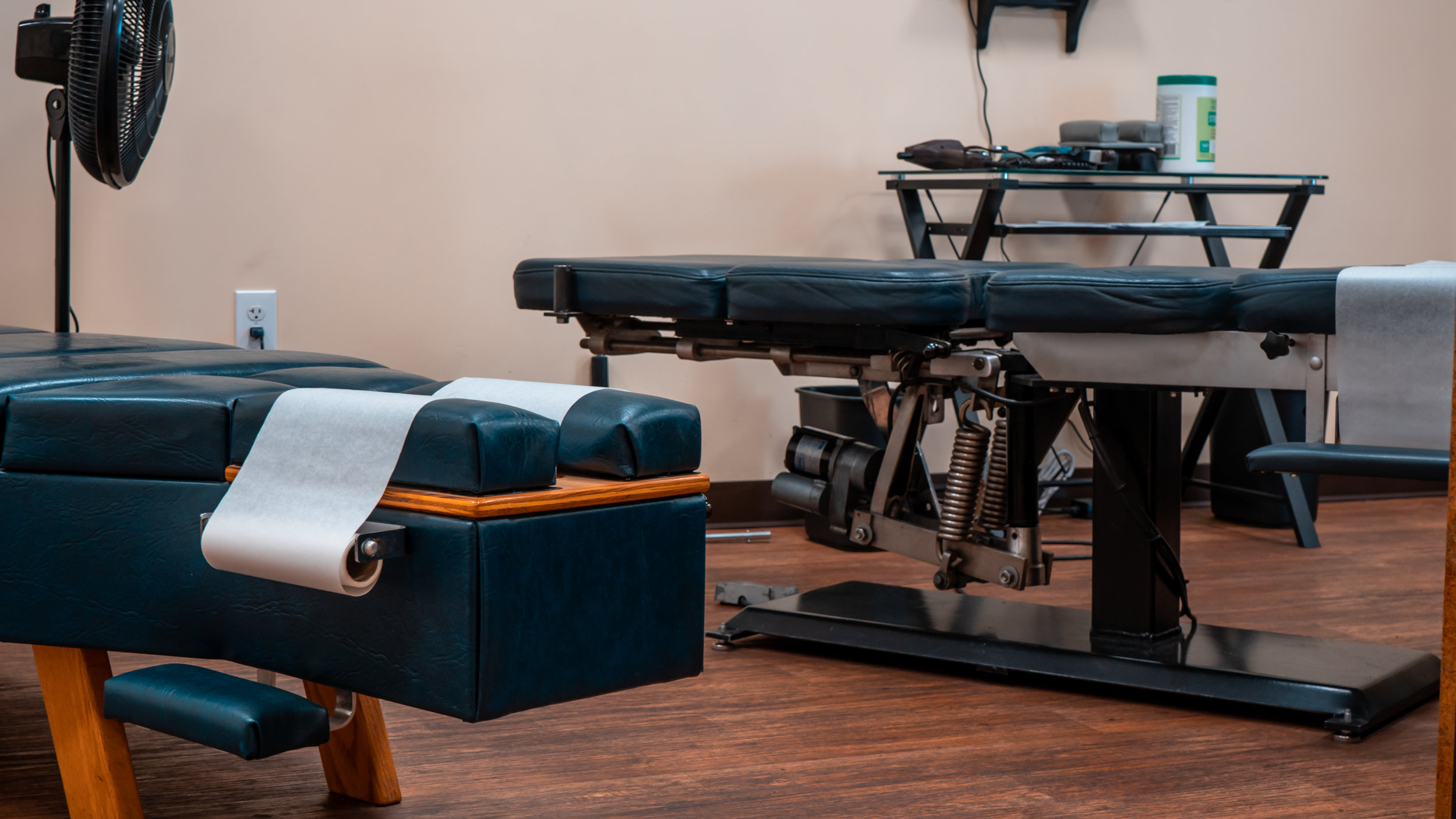
Spinal decompression uses a motorized table to apply controlled traction to the lumbar spine. The goal is to reduce mechanical pressure on discs and nerve-sensitive structures. At Renaud Chiropractic Clinic, settings are adjusted according to the patient’s condition and comfort.
Disc decompression therapy may be considered when sciatica is associated with a bulging or herniated disc, degenerative changes, or certain nerve-compression patterns. It is not suitable for everyone. Fractures, severe osteoporosis, some tumors, significant instability, pregnancy, and certain medical conditions can affect candidacy.
Spinal decompression is not a guaranteed repair for a damaged disc. It is one conservative option that may be included after an examination and, when needed, coordination with another healthcare professional.

Can Sports or Exercise Trigger Sciatica?
Running, weight training, field sports, and repeated bending or rotation can irritate the lower back, especially after a sudden increase in training.
Chiropractic for athletes should consider the sport, training schedule, previous injuries, strength, mobility, and positions that reproduce symptoms. Chiropractic care for sports recovery may include adjustments, activity changes, progressive movement, and return-to-practice guidance.
Aggressive hamstring stretching can sometimes increase symptoms when the nerve is sensitive. Pain that travels below the knee, changes strength, or alters running mechanics deserves evaluation.
What Can I Do at Home?
Complete bed rest is generally discouraged for uncomplicated sciatica. Short, comfortable walks and regular position changes are often better tolerated than staying still for hours.
Use supportive sitting positions, stand regularly, and avoid repeated heavy lifting, deep bending, or twisting while symptoms are highly irritable. Stop any exercise that sends pain farther down the leg, increases numbness, or causes weakness.
When Is Sciatica an Emergency?
Seek urgent medical care for new loss of bladder or bowel control, numbness around the groin or inner thighs, rapidly worsening weakness, severe symptoms in both legs, fever with back pain, or pain after significant trauma. These signs may indicate a serious condition requiring immediate evaluation.
Arrange a timely evaluation when pain steadily worsens, numbness spreads, the foot begins to drag, or symptoms are not improving.
What May a Personalized Care Plan Include?
A plan may include chiropractic adjustments, spinal decompression, supportive therapies, movement recommendations, and changes to work, driving, lifting, or training habits. Renaud Chiropractic Clinic’s verified services include chiropractic care, spinal decompression, digital X-ray imaging, ultrasound, and electrical muscle stimulation.
Someone searching for a “sciatica chiropractor near me” may need help with a new episode. Another person searching for a “family chiropractor near me” may want support for recurring back problems and changing activity demands. In either case, care should be clear, measured, and adjusted according to the patient’s response.
Talk With Us About Your Sciatica Symptoms
Sciatica can affect how you sit, sleep, work, drive, and stay active. Understanding what may be causing your symptoms is an important first step toward finding the right care approach. Renaud Chiropractic Clinic provides personalized evaluations and conservative care based on each patient’s needs.
Schedule a consultation today to learn whether chiropractic care, spinal decompression, or a coordinated medical referral may be appropriate for your symptoms.
Frequently Asked Questions
-
No. Low back pain may remain in the lumbar area, while sciatica usually involves nerve-related symptoms traveling into the buttock or leg.
-
A chiropractor can evaluate findings that may indicate lumbar nerve irritation. Referral is appropriate when symptoms require MRI, medical testing, medication management, or surgical consultation.
-
Symptoms can worsen when a technique is unsuitable or too aggressive. Care should be modified if leg pain spreads, numbness increases, or weakness develops.
-
No. Candidacy depends on the suspected cause, medical history, examination, and contraindications.
-
Some episodes improve within several weeks, while others last longer due to spinal narrowing, recurring irritation, health factors, or physical demands.
-
Gentle activity is often encouraged, but the right type depends on your symptoms. Stop activities that increase weakness, numbness, or radiating pain.
-
No. X-rays show bones and alignment, not nerves or spinal discs. MRI may be recommended when soft-tissue detail is needed.
-
Yes. A collision may strain the lower back, irritate a disc, or aggravate an existing condition. New radiating pain, numbness, or weakness should be evaluated.
-
Yes, when conservative care is appropriate. The plan should account for the sport, training load, neurological findings, and safe return to activity.
-
Urgent care is needed for bladder or bowel changes, saddle numbness, rapidly progressing weakness, fever, major trauma, or other red flags.