
Ergonomics and Posture

Ergonomics and posture influence how your body handles work, driving, exercise, technology use, and everyday household tasks. At Renaud Chiropractic Clinic, we look beyond whether someone is simply “sitting straight.” We consider how the spine and joints move, which positions increase discomfort, how long those positions are held, and whether a person’s environment fits their body.
Healthy posture does not mean holding one rigid position throughout the day. It usually means finding supported, comfortable positions and changing them before the muscles and joints become overloaded. For many people, the most useful goal is not perfect posture. It is better movement variety, a more suitable setup, and greater awareness of the early signs of strain.
What Are Ergonomics?
Ergonomics means adapting a task, tool, or environment to the person rather than forcing the person to adapt to an unsuitable setup.
The National Institute for Occupational Safety and Health defines ergonomics as designing work tasks and demands to fit the capabilities of workers. Its purpose is to reduce exposure to factors associated with work-related musculoskeletal conditions, including forceful exertion, repetitive movement, awkward positioning, and prolonged static postures.
Ergonomics applies to much more than office chairs. It can include:
The height of a desk or kitchen counter
The position of a vehicle seat and steering wheel
The way a warehouse employee lifts or carries objects
The placement of a keyboard and monitor
The size and setup of athletic equipment
How frequently someone changes positions
When an environment does not fit the person using it, the body often compensates. The shoulders may rise toward the ears, the head may move closer to a screen, the lower back may round, or one side of the body may begin carrying more weight.
These changes are not automatically signs of injury. However, maintaining the same position for long periods or repeating it under physical strain may contribute to fatigue, stiffness, and discomfort.

Is There One Correct Posture?
There is no single posture that is right for every person, body type, or activity.
OSHA’s computer-workstation guidance specifically explains that there is no single correct posture or arrangement of equipment that fits everyone. A practical setup should provide support, place frequently used objects within easy reach, and allow the person to change positions comfortably.
Posture is naturally dynamic. You might sit upright while typing, recline slightly while reading, stand during a phone call, and walk for a few minutes between projects. Each position distributes physical load differently.
Instead of constantly pulling your shoulders backward or forcing an exaggerated curve into your lower back, focus on support and adaptability. Your head should not need to crane toward the monitor, your feet should feel stable, and your arms should reach the keyboard without causing your shoulders to lift.
The most helpful posture is often the next comfortable position rather than one “perfect” position held all day.
What Symptoms May Be Related to Poor Ergonomics?
An unsuitable workstation or repetitive daily task may contribute to symptoms that gradually build as the day progresses. People commonly notice:
Neck stiffness or reduced movement
Tightness across the shoulders
Aching between the shoulder blades
Headaches associated with neck tension
Lower-back stiffness
Wrist or forearm fatigue
Tingling or numbness
Discomfort after prolonged sitting or standing
The timing and pattern of symptoms can provide useful information. Neck discomfort that begins after several hours at a laptop may involve different factors than pain that started after a collision. Lower-back stiffness after driving may relate to seat position, limited movement, muscle fatigue, or an underlying joint or disc condition.
Posture is only one possible contributor. Arthritis, disc changes, nerve irritation, previous injuries, sleep habits, stress, and physical conditioning may also influence how someone feels.
A neck pain chiropractor should evaluate the full symptom pattern rather than assuming every problem is caused by looking down at a phone or sitting incorrectly.
Did You Know?
The U.S. Bureau of Labor Statistics reported 248,180 private-industry cases involving back conditions and time away from work in 2024, highlighting how prolonged sitting, repetitive movements, and poor ergonomics can affect daily comfort.
A small CDC workplace study found that employees using sit-stand desks sat 66 fewer minutes per day and reported 54% less upper-back and neck pain. This suggests that changing positions regularly may be more beneficial than maintaining one posture all day.


How Should a Computer Workstation Be Arranged?
A workstation should bring your work closer to you. It should not require you to repeatedly lean, twist, reach, or look sharply downward.
Begin with the chair. Sit far enough back to use the backrest, and adjust the height so your feet rest on the floor or on a stable foot support. The position should not create uncomfortable pressure behind your thighs.
Place the monitor directly in front of you. It should be high enough that you can view the screen without continually dropping or lifting your head. A laptop used for long periods may require an external keyboard and mouse because raising the laptop screen also raises its built-in keyboard.
Keep your keyboard, mouse, phone, and frequently used documents within easy reach. Your elbows should remain reasonably close to your sides without requiring you to lift your shoulders.
When two monitors are used, place the primary screen directly ahead. When both monitors are used equally, position them close together to reduce repeated head turning.

How Can You Improve Your Posture Without Becoming Rigid?
Begin by noticing what happens shortly before discomfort develops.
Do your shoulders gradually rise?
Do you lean onto one elbow?
Does your chin move toward the screen?
Do you shift most of your weight onto the same hip while standing?
Awareness is most useful when it leads to a small, comfortable change rather than constant self-correction.
Try alternating between several supported positions. Stand during a brief task, take a short walk, change the angle of your chair, or place one foot on a low support while standing. These simple changes reduce the amount of time the same tissues remain under load.
Movement capacity also matters. A workstation cannot fully compensate for a body that is fatigued, injured, or unprepared for a demanding task. Likewise, exercise cannot make a poorly arranged workstation harmless.
A balanced approach typically combines appropriate movement, recovery, environmental changes, and care for any underlying condition.
Can Chiropractic Care Help With Posture-Related Discomfort?
A chiropractor can evaluate spinal and joint movement, posture, muscle tension, daily habits, and neurological signs.
At Renaud Chiropractic Clinic, an evaluation may begin with a conversation about your symptoms, previous injuries, work demands, physical activities, and the positions that make you feel better or worse. Posture and range of motion may also be assessed as part of determining what factors could be contributing to discomfort.
When appropriate, care may include chiropractic adjustments intended to improve movement in restricted joints. A neck adjustment should only be considered after the cervical spine, symptoms, and relevant health history have been evaluated.
Some patients may benefit from gentler techniques, ergonomic changes, movement recommendations, medical evaluation, or a combination of approaches.
Chiropractic care does not replace the need to modify an aggravating workstation or repetitive task. Care should work alongside practical changes that help the body manage everyday demands more comfortably.
When Are Spinal Decompression and Disc Decompression Therapy Relevant?
Poor posture alone does not mean someone needs spinal decompression.
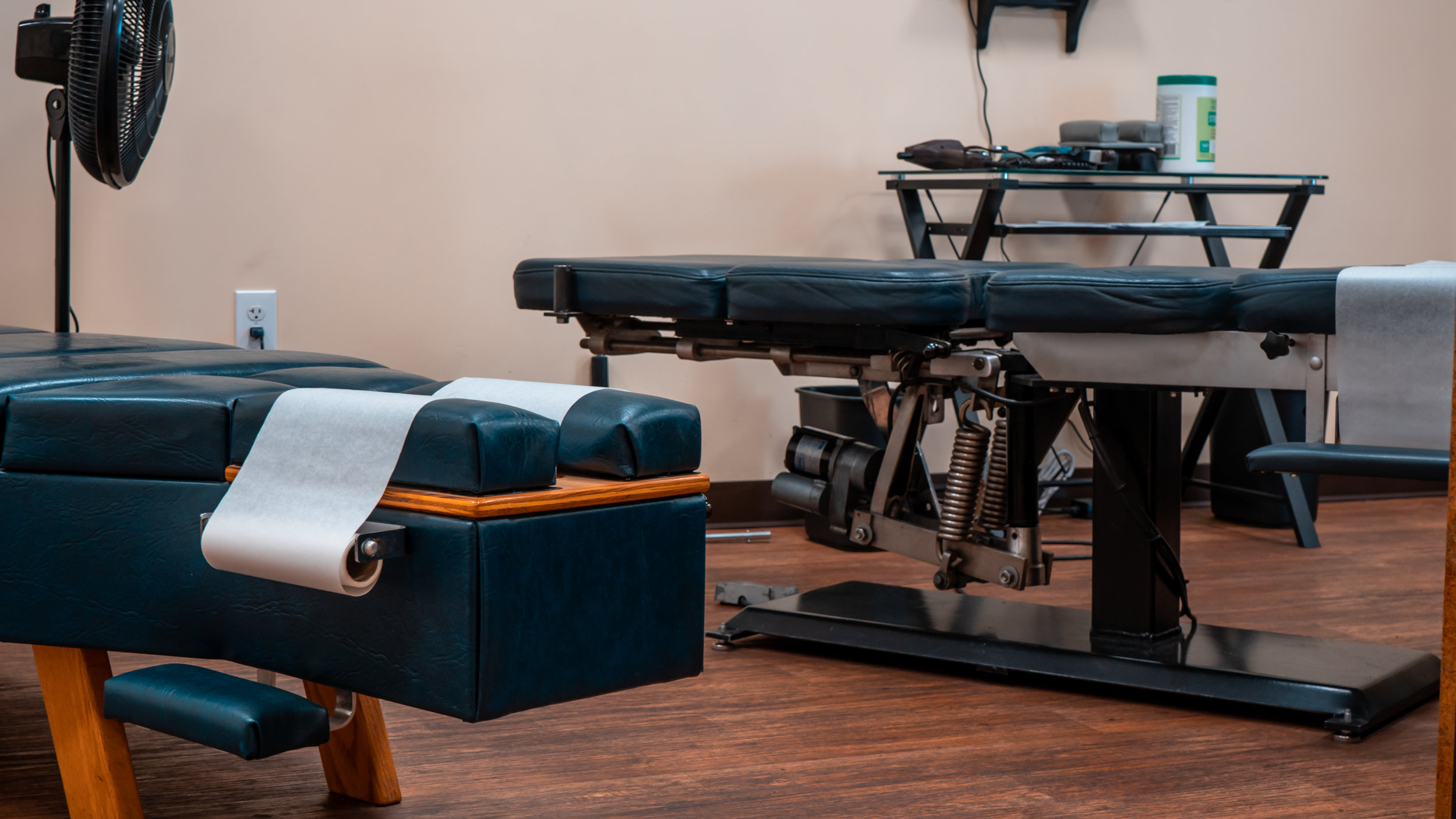
Spinal decompression or disc decompression therapy may be considered when an evaluation indicates that a cervical or lumbar disc condition could be contributing to symptoms. Renaud Chiropractic Clinic offers spinal decompression using controlled traction based on the patient’s condition and treatment plan.
For example, someone searching for a sciatica chiropractor near me may be experiencing leg pain, numbness, or tingling associated with irritation of a lumbar nerve root. Another person may have arm symptoms related to a cervical disc condition.
In these cases, posture may affect comfort, but it does not provide a complete diagnosis.
Disc decompression therapy is not appropriate for every patient. Whether it should be considered depends on the suspected condition, health history, examination findings, and possible contraindications.
How Can Drivers Improve Their Ergonomics?
Driving combines sitting, vibration, limited movement, and repeated head turning.
Adjust your seat so you can reach the pedals without sliding your hips forward. Your back should remain supported, and the steering wheel should be close enough that your elbows remain slightly bent.
Position your mirrors after adjusting the seat. Properly placed mirrors may reduce the need for excessive twisting and can make it easier to notice when your body begins leaning to one side.
On longer drives, take reasonable opportunities to leave the vehicle and move. Even a brief position change can feel helpful after sitting for an extended period.
Someone searching for an auto accident chiropractor near Sanger may have symptoms caused by the collision itself rather than ordinary driving posture. Whiplash, joint sprains, muscle strains, concussions, fractures, and disc injuries require an appropriate evaluation.
New neurological symptoms, severe headaches, confusion, loss of consciousness, or significant trauma should receive prompt medical attention.
How Do Ergonomics Apply to Athletes?
Ergonomics also plays a role in sports and exercise. Equipment size, technique, workload, repetition, recovery time, and movement efficiency all affect the demands placed on the body.
Chiropractic for athletes should account for the individual sport, training schedule, symptoms, joint movement, strength, and previous injuries. Chiropractic care for sports recovery may include joint care, movement guidance, activity modifications, and coordination with other healthcare professionals when appropriate.
An athlete who repeatedly loses form toward the end of practice may need more than a reminder to stand straighter. Fatigue, pain, limited mobility, equipment fit, or a rapid increase in training volume may all contribute.
The goal is not to create one perfect athletic position. It is to help the athlete manage the movements and physical demands required by the sport.

When Should Posture-Related Discomfort Be Evaluated?
Consider scheduling an evaluation when discomfort:
Keeps returning despite reasonable changes
Interferes with work, driving, or sleep
Travels into an arm or leg
Includes recurring numbness or tingling
Limits your normal range of motion
Began after an accident or injury
Continues to worsen
People searching for a family chiropractor near me may have different concerns within the same household. A parent may have desk-related neck tension, a student may struggle with an unsuitable laptop setup, and an active adult may experience recurring lower-back stiffness.
Each person should receive an individual evaluation rather than the same standard posture-correction plan.
Progressive weakness, loss of coordination, bowel or bladder changes, numbness around the groin, or severe symptoms following major trauma require prompt medical attention.
Build a More Comfortable Daily Routine
Ergonomics is not about forcing your body into a perfect pose. It is about creating a better fit between your body, your environment, and the tasks you perform each day. Renaud Chiropractic Clinic provides personalized evaluations for people experiencing posture-related neck, back, or joint discomfort.
Schedule a consultation today to discuss your symptoms and learn whether chiropractic care, ergonomic changes, spinal decompression, or a coordinated medical referral may be appropriate.
Frequently Asked Questions
-
No. Posture may contribute to discomfort, but pain can also involve an injury, joint irritation, disc condition, nerve problem, arthritis, or another medical concern.
-
No. Holding any position for too long can become tiring. Use a supported position and change it regularly rather than forcing yourself to remain rigid.
-
Position the monitor directly in front of you at a height that allows you to view the screen without repeatedly bending your neck forward or backward.
-
Item descriptionStanding is not automatically better. Remaining on your feet all day can also cause fatigue. Alternating between supported sitting, standing, and walking is generally more practical.
-
Posture naturally changes with tasks and positions. Chiropractic care may support mobility and comfort, but long-term improvement also depends on habits, physical capacity, workstation fit, and the cause of symptoms.
-
A neck adjustment may be appropriate for certain mechanical neck conditions, but an examination should come first. Screen position and device habits should also be addressed.
-
Spinal decompression is not a general posture treatment. It may be considered when certain disc-related conditions are contributing to neck, back, arm, or leg symptoms.
-
There is no universal schedule that suits everyone. Try to change positions before discomfort becomes intense and include brief movement opportunities throughout your day.
-
Prolonged sitting may aggravate some cases, but sciatica involves irritation of a nerve root. Leg pain, tingling, numbness, or weakness should receive a broader evaluation.
-
Seek immediate medical care for severe trauma, progressive weakness, loss of bladder or bowel control, numbness around the groin, chest pain, fever with back pain, or sudden neurological changes.